Best Floor Tiles for High-Traffic Areas: Top 7 Picks

Floor Tiles

Best Floor Tiles for High-Traffic Areas: Top 7 Low-Maintenance Picks for Your Home

Choosing the right flooring for an Australian home involves more than just picking a pretty pattern. Between the red dust of the outback, the sandy feet from the coast, and the high-energy flow of modern open-plan living, your floors endure significant stress. Finding the best floor tiles for high-traffic areas is the secret to a home that looks pristine years after installation without requiring a grueling maintenance schedule.

In this guide, we break down the top 7 low-maintenance picks that balance durability with aesthetic appeal. Whether you are renovating a bustling kitchen in Sydney or a sun-drenched hallway in Perth, these selections are engineered to withstand the heavy footfall of kids, pets, and entertaining.

See more: Factory Outlet Furniture Sydney: Bargains Without Sacrificing Style


What Defines a High-Traffic Area?

In residential architecture, a high-traffic area is any zone where movement is frequent and concentrated. These spots are the “highways” of your home.

Common High-Traffic Zones

  • The Entryway and Mudroom: The first point of contact for grit, moisture, and heavy boots.
  • The Kitchen: The heart of the home, prone to spills, dropped utensils, and constant pivoting.
  • Main Hallways: Narrow channels that concentrate wear and tear into specific paths.
  • Living and Dining Rooms: Areas where furniture is frequently moved and social gatherings occur.

Why Tile Choice Matters

Standard tiles may look great initially, but in high-velocity zones, inferior materials can crack, stain, or lose their finish. Selecting the best floor tiles for high-traffic areas ensures that your investment resists abrasion and remains easy to clean, keeping your home’s resale value high.
Floor Tiles

The Science of Durability: Understanding PEI Ratings

Before we dive into our top picks, it is essential to understand how tiles are rated for wear. The Porcelain Enamel Institute (PEI) rating is the industry standard for measuring a tile’s resistance to abrasion.

PEI RatingRecommended UseSuitability for High-Traffic
PEI 1Residential walls or light-duty bathrooms.No
PEI 2Residential bathrooms and bedrooms.No
PEI 3All residential rooms, light commercial.Moderate
PEI 4High-traffic residential, medium commercial.Ideal
PEI 5Heavy commercial and industrial.Exceptional

For the best floor tiles for high-traffic areas, we recommend focusing on tiles with a PEI 4 or 5 rating to ensure longevity.


Top 7 Low-Maintenance Picks for Australian Homes

1. Full-Body Porcelain Tiles

Porcelain is the undisputed king of high-traffic flooring. Unlike ceramic, porcelain is fired at higher temperatures, making it denser and less porous. “Full-body” means the color and pattern run through the entire thickness of the tile.

  • Why it works: If a full-body porcelain tile chips, the damage is nearly invisible because the color is consistent throughout.
  • Maintenance: Sweep and occasional damp mop; it requires no sealing.

2. Glazed Vitrified Tiles (GVT)

GVT tiles offer a protective glaze layer over a vitrified body. This glaze allows for incredibly realistic digital prints, such as marble or wood grains, while the vitrified core handles heavy loads.

  • Why it works: The non-porous surface prevents liquid absorption, making it perfect for spilled wine or muddy paw prints.
  • Maintenance: Extremely stain-resistant; just use a pH-neutral cleaner.

3. Natural Slate (Honed or Riven)

For those seeking a rustic, Australian aesthetic, slate is a powerhouse. It is naturally slip-resistant and incredibly hard.

  • Why it works: Its multi-tonal nature hides dust and pet hair exceptionally well.
  • Maintenance: Needs to be sealed once every few years, but the daily upkeep is minimal.

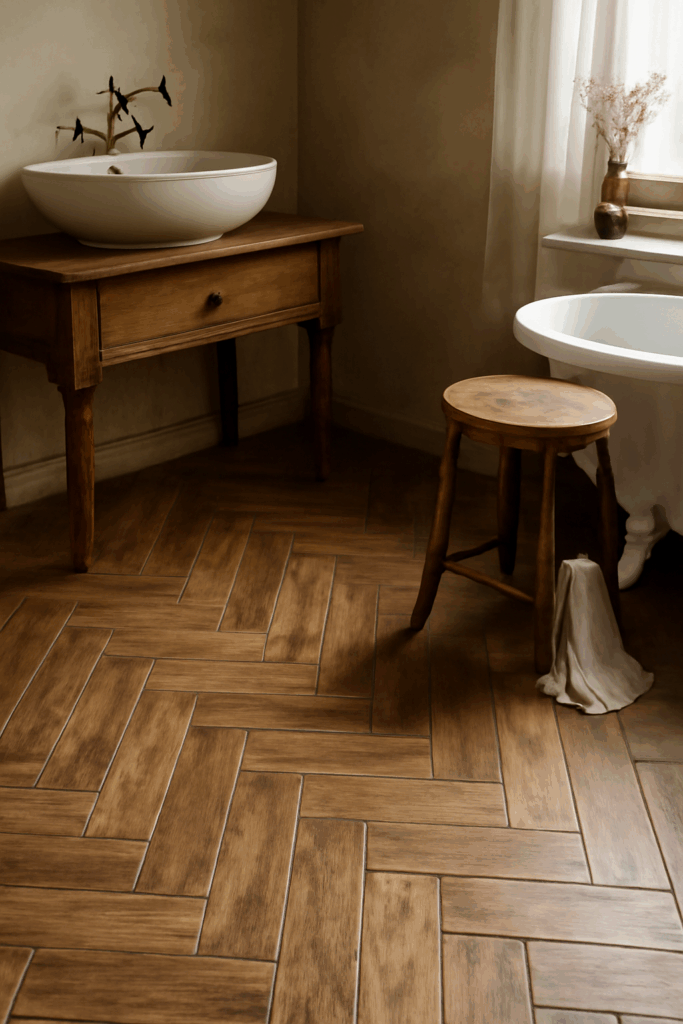
4. Timber-Look Porcelain Planks

Want the warmth of hardwood without the scratching and water damage? Timber-look porcelain is the ultimate “cheat code” for high-traffic living rooms.

  • Why it works: You get the aesthetic of Oak or Spotted Gum with the scratch-resistance of stone.
  • Maintenance: No sanding or polishing required—ever.

5. Concrete-Look Large Format Tiles

Minimalism meets durability. Large format tiles (600x600mm or larger) reduce the number of grout lines—the most vulnerable part of any floor.

  • Why it works: Fewer grout lines mean less scrubbing and a more seamless, modern look.
  • Maintenance: Focus on cleaning the tiles; the minimal grout stays cleaner for longer.

6. Natural Quartzite

Often confused with marble, quartzite is significantly harder and more resistant to scratching and etching from acidic spills (like lemon juice or vinegar).

  • Why it works: It offers a high-end luxury look with industrial-strength durability.
  • Maintenance: Requires sealing but is remarkably resilient against physical impact.

7. Terrazzo (Real or Porcelain-Effect)

Terrazzo is making a massive comeback in Australian design. Its speckled appearance is more than just a style choice; it is functionally superior at hiding imperfections.

  • Why it works: The busy pattern naturally masks small scratches or dust buildup.
  • Maintenance: Porcelain-effect terrazzo offers the best of both worlds—zero sealing and high durability.

Key Benefits of Choosing High-Performance Tiles

Investing in the best floor tiles for high-traffic areas provides several long-term advantages:

  1. Cost Efficiency: While the initial cost may be higher than laminate or vinyl, tiles can last 20–50 years, reducing the “cost per year” significantly.
  2. Hypoallergenic Living: Unlike carpet, tiles do not trap dust mites, pollen, or dander—essential for the 1 in 5 Australians who suffer from hay fever.
  3. Thermal Mass: In the Australian climate, tiles help regulate indoor temperatures, keeping homes cooler in summer and retaining sun-warmth in winter.
  4. Water Resistance: Tiles are impervious to the humidity and spills that cause wood or laminate to warp.

Best Practices for Installation and Maintenance

Choosing the Right Grout

Even the best tile can be let down by poor grout choice. For high-traffic areas, always opt for epoxy grout. Unlike traditional cement-based grout, epoxy is waterproof and stain-proof, ensuring your “low-maintenance” floor actually stays that way.

The “Slip Resistance” Factor

In Australia, the “P” rating (Pendulum test) is vital. For entryways and wet areas, look for a P3 or P4 rating to ensure safety when the floor is wet.

Professional vs. DIY

While DIY is tempting, high-traffic tiles must be perfectly level (lippage-free) to prevent tripping and edge-chipping. Professional installation ensures a flat surface that can withstand years of furniture movement.


Common Mistakes to Avoid

  • Using Wall Tiles on Floors: Wall tiles are thinner and will crack under the weight of furniture or foot traffic.
  • Choosing High-Gloss in Entryways: While beautiful, high-gloss finishes show every footprint and can be slippery when wet.
  • Neglecting the Subfloor: If your subfloor isn’t stable, even the strongest porcelain will crack as the house settles.

Frequently Asked Questions (FAQ)

Which tile is best for a home with large dogs?

Porcelain tiles with a matte or textured finish are best. They are virtually scratch-proof and provide better traction for paws than polished marble or ceramic.

How do I clean grout in high-traffic areas?

If using epoxy grout, a simple wipe-down is enough. For traditional grout, use a mixture of baking soda and vinegar or a dedicated oxygen-based grout cleaner to lift deep-seated dirt.

Are darker tiles better for high-traffic zones?

Not necessarily. Very dark tiles (black/navy) often show dust and water spots more than mid-tone greys or beiges. “Greige” or speckled patterns are the most forgiving.

Do all floor tiles need to be sealed?

No. Most modern porcelain and glazed tiles do not require sealing. Only natural stones (slate, marble, limestone) and some unglazed terracotta need regular sealing.

Is porcelain better than ceramic for a kitchen?

Yes. Porcelain is denser and has a lower water absorption rate (less than 0.5%), making it far superior for the spills and heavy footfall of a kitchen.


Conclusion: Investing in Your Home’s Future

Selecting the best floor tiles for high-traffic areas is a strategic decision that blends lifestyle needs with long-term property value. By prioritizing PEI ratings, opting for low-porosity materials like porcelain, and choosing smart finishes like timber-looks or terrazzo, you create a home that is as functional as it is beautiful.

Don’t let the fear of maintenance dictate your design. With the right tile, you can enjoy an elegant interior that stands up to the rigors of Australian life.

Internal Linking Suggestions:

  • Learn more about [Slip Resistance Ratings for Australian Homes].
  • Check out our guide on [How to Choose the Right Grout Color].
  • Explore the [Benefits of Porcelain vs. Ceramic].

External Reference Suggestions:

  • Refer to the Australian Tile Council for technical standards.
  • Consult the CSIRO Handbook for Slip Resistance Classifications.

Air Conditioning Installation Baulkham Hills: What to Expect on Install Day

Air Conditioning Installation Baulkham Hills: What to Expect on Install Day

This guide explains what typically happens, what the homeowner should prepare, and what a good handover looks like.

What should they do before the installers arrive?

They should clear access to all designated work zones prior to air conditioning installation Baulkham Hills, particularly the rooms where indoor units will be mounted and the external area allocated for the condenser. It is also advisable to remove fragile items from nearby shelves and walls to mitigate the risk of accidental damage during the installation process.

They may also want to anticipate a limited level of operational noise and minor dust while the air conditioning installation Baulkham Hills team completes the setup. If pets are sensitive to unfamiliar activity, placing them in a separate room can support a smoother and more controlled installation workflow.

What time do they usually arrive, and how long does it take?

They often arrive in the morning within a booked window, then do a short site check before tools come inside. A standard split system install commonly takes a few hours, while multi-split or ducted jobs can take most of the day.

Time varies based on access, wall type, pipe run length, switchboard capacity, and whether drilling through brick is required.

What happens in the initial site check?

They will confirm the agreed unit locations and check the pipe and cable route from indoor to outdoor. They also verify clearances, airflow, and practical service access for future maintenance.

If anything differs from the quote, such as longer pipe runs or unexpected obstacles, they should explain changes before proceeding.

Air Conditioning Installation Baulkham Hills: What to Expect on Install Day

How do they protect the home during installation?

They generally lay drop sheets, set up tools in a contained area, and drill carefully to control dust. They should keep foot traffic minimal through finished areas where possible.

If wall penetration is needed, they should patch and seal neatly. Any external penetrations should be weatherproofed.

What should they expect for indoor unit installation?

They will mount a bracket, level it, and secure it to a solid structure. Then they connect the refrigerant lines, condensate drain, and electrical interconnect before hanging the indoor unit.

They should expect some drilling and brief periods of louder noise. The indoor location should allow good airflow and easy filter access.

What should they expect for outdoor unit installation?

They will place the condenser on a stable base, usually a wall bracket or slab, with vibration control where appropriate. They also confirm airflow clearance so the unit can reject heat properly.

They should expect the installer to consider neighbour noise, drainage, and access for servicing.

How do they run pipes, drains, and cabling?

They typically run insulated copper pipes, a power or interconnect cable, and a condensate drain line between units. Pipework may be concealed in wall cavities where feasible, or covered externally with trunking for a clean finish.

They should expect the drain to be routed to a suitable discharge point to reduce the risk of dripping and water marks.

Will they need an electrician, and what happens at the switchboard?

Many installs require electrical work, such as a dedicated circuit, isolation switch, or switchboard upgrades if capacity is limited. A licensed electrician may attend as part of the same team or as a scheduled step.

They should expect compliance checks, correct cable sizing, and safety isolation procedures before power is connected.

What noise, mess, or disruptions should they plan for?

They should plan for drilling noise, short periods of louder hammer drilling in brick, and some dust around penetration points. Power may be switched off briefly if electrical work is required.

Parking access for the install vehicle can help speed things up. If strata or tight driveways are involved, it helps to pre-arrange access.

How do they test the system once it is installed?

They should expect a vacuum test and commissioning process to confirm the refrigerant circuit is dry and sealed. Then they run heating and cooling modes, check temperature split, airflow, and ensure the drain flows correctly.

They also confirm the outdoor unit starts and stops normally and that no unusual vibration or rattles are present.

What questions should they ask during the handover?

They should ask for a quick run-through of the remote, modes, and recommended temperature settings for efficiency. They should also ask how to remove and clean filters, and how often basic maintenance should be done.

They should request warranty details, a compliance certificate where applicable, and guidance on what to do if an error code appears.

What should they check before the team leaves?

They should check the unit sits level, the trunking looks neat, and external penetrations are sealed. They should also confirm the drain is not dripping where it should not, and that the outdoor unit is secure.

They should ask the installer to confirm the model and serial details are recorded and that the area is cleaned up.

What issues could cause delays on the day?

Delays can happen if access is blocked, wall structure differs from expectations, or the outdoor location needs changes for clearance. Switchboard limitations and unexpected electrical requirements can also add time.

If the homeowner is available to approve minor placement adjustments quickly, it can prevent rework and keep the job on schedule.

What can they do after installation to keep it running well?

They should clean filters regularly and keep vents and return air paths unobstructed. They should also keep the outdoor unit clear of leaves and debris to maintain airflow.

If performance drops or unusual noise appears, they should arrange a service early, rather than running the unit harder and risking bigger repairs.

FAQs (Frequently Asked Questions)

What preparations should homeowners make before the air conditioning installers arrive in Baulkham Hills?

Homeowners should clear access to work zones, especially rooms receiving indoor units and the outdoor condenser location. They should remove fragile items near the install area and plan for some noise and minor dust. If pets are anxious, it’s helpful to keep them in a separate room.

How long does a typical air conditioning installation take, and what factors influence this?

Standard split system installations usually take a few hours, while multi-split or ducted systems can take most of the day. Time varies based on site access, wall type, pipe run length, switchboard capacity, and whether drilling through brick is required.

Air Conditioning Installation Baulkham Hills: What to Expect on Install Day

What steps do installers take to protect the home during air conditioning installation?

Installers lay drop sheets, contain tools in a designated area, and drill carefully to control dust. They minimize foot traffic through finished areas and patch and seal any wall penetrations neatly. External penetrations are weatherproofed to protect the home.

Will electrical work be required during installation, and how is it handled?

Many installations require electrical work such as dedicated circuits or switchboard upgrades if capacity is limited. A licensed electrician may attend as part of the team or separately. Compliance checks, correct cable sizing, and safety isolation procedures are performed before power connection.

What should homeowners expect during the system testing and handover process?

Installers perform vacuum tests and commissioning to confirm the refrigerant circuit is sealed. They run heating and cooling modes, check temperature splits, airflow, drain flow, and ensure the outdoor unit operates normally without unusual vibrations. During handover, they explain remote controls, maintenance tips, warranty details, compliance certificates, and error code guidance.

How can homeowners maintain their air conditioning system after installation for optimal performance?

Homeowners should clean filters regularly, keep vents and return air paths unobstructed, and ensure the outdoor unit is clear of leaves and debris to maintain airflow. If performance drops or unusual noises occur, scheduling a service promptly helps prevent bigger repairs.

More about Commercial Air Conditioning Hornsby: 4 Ways to Improve Energy Efficiency

Commercial Air Conditioning Hornsby: 4 Ways to Improve Energy Efficiency

Commercial Air Conditioning Hornsby: 4 Ways to Improve Energy Efficiency

The good news is they can usually cut consumption without sacrificing comfort. Below are four practical, high-impact ways businesses can improve commercial air conditioning energy efficiency in Hornsby.

What changes the energy bill fastest in a commercial air conditioning setup?

Controls and setpoints usually make the quickest difference because they influence runtime every day. When scheduling, zoning, and temperature targets are tuned to real building use, the system runs less often and with fewer extreme peaks.

They should start by checking whether the unit is conditioning empty areas, running after hours, or fighting against heat loads that could be reduced with better airflow and maintenance.

How can smarter controls and scheduling reduce wasted cooling hours?

They can unlock measurable efficiency gains by aligning HVAC operating schedules with actual occupancy patterns rather than default or assumed business hours—an optimisation frequently implemented in commercial air conditioning Hornsby environments. Even a single additional hour of operation each weekday compounds significantly over the course of a year, particularly for multi-split or ducted systems servicing larger commercial floor areas.

Key improvements include:

  • Setting start/stop times based on when staff actually arrive and leave
  • Using “optimum start” to pre-cool only when needed
  • Locking setpoint ranges so temperatures do not drift too low
  • Adding CO₂ or occupancy sensors in meeting rooms and shared zones

If they manage multiple tenancies or zones, a building management system (BMS) or advanced controller can prevent simultaneous heating and cooling, which is a common hidden energy drain.

Commercial Air Conditioning Hornsby: 4 Ways to Improve Energy Efficiency

Why do regular servicing and airflow checks improve efficiency so much?

Clean filters, correct refrigerant charge, and balanced airflow reduce the workload on compressors and fans. When airflow is restricted or coils are dirty, systems run longer to achieve the same result, which increases power draw and wear.

They can improve efficiency by ensuring technicians:

  • Clean indoor filters and inspect return-air paths
  • Clean condenser coils and check outdoor unit clearance
  • Verify refrigerant charge and look for leaks
  • Check fan speeds, belts (if applicable), and motor performance
  • Confirm drains, sensors, and thermostat calibration are working correctly

Routine servicing also helps them spot early issues such as short cycling, failing capacitors, or incorrect control settings, which can spike consumption long before a breakdown happens.

How does zoning and temperature setpoints prevent overcooling and hot spots?

Zoning and setpoint discipline reduce “comfort complaints” that lead to energy-wasting fixes, like lowering the whole building temperature to satisfy one warm room. When zones reflect real usage, the system can condition only what is needed, at the right time.

Practical steps include:

  • Separating high-load areas such as server closets, kitchens, or sunlit rooms
  • Using individual zone controls where the layout allows it
  • Keeping cooling setpoints realistic, often around 23–24°C for offices
  • Avoiding frequent manual overrides that disrupt schedules

They should also check for causes of hot spots that are not HVAC capacity issues, such as blocked vents, poor diffuser placement, or after-hours equipment loads.

When does upgrading equipment or adding efficiency add-ons make sense?

Upgrades make sense when existing systems are near end of life, frequently repaired, or clearly mismatched to the building’s needs. High-efficiency inverter systems, modern packaged units, and variable speed fans can reduce energy use because they ramp output instead of cycling hard on and off.

They can also consider targeted add-ons before a full replacement, such as:

  • Adding VSDs (variable speed drives) to suitable fan motors
  • Installing smarter zone controllers or integrating with a BMS
  • Improving insulation and sealing to reduce heat gain
  • Using shading or film on high-solar-glare windows

If they are planning a replacement, they should ensure the new system is properly sized and commissioned. Oversizing is common and can reduce efficiency because it short cycles, struggles with humidity control, and wears components faster.

What should they do next to improve commercial air conditioning efficiency in Hornsby?

They should start with a simple energy-efficiency review: confirm scheduling, service the system, validate airflow, and tighten zoning and setpoints. Those steps are usually the lowest-cost path to immediate savings.

If results plateau, they can then assess whether a controller upgrade or equipment replacement offers a better long-term return, especially for sites with long operating hours or rising maintenance costs.

FAQs (Frequently Asked Questions)

What factors most quickly impact the energy bill in commercial air conditioning systems in Hornsby?

Controls and setpoints have the fastest impact on energy bills because they directly influence daily runtime. Proper scheduling, zoning, and temperature targets aligned with actual building use reduce unnecessary operation and extreme peaks, cutting energy consumption effectively.

How can smarter controls and scheduling reduce wasted cooling hours in commercial buildings?

Smarter controls match HVAC operation to real occupancy rather than assumed business hours, preventing unnecessary runtime. Key strategies include setting accurate start/stop times, using optimum start for pre-cooling only when needed, locking temperature setpoint ranges to avoid overcooling, and installing CO₂ or occupancy sensors in shared spaces. Advanced controllers or building management systems can also prevent inefficient simultaneous heating and cooling across zones.

Why is regular servicing and airflow checks essential for improving commercial AC efficiency?

Regular servicing ensures clean filters, correct refrigerant charge, and balanced airflow, which reduce compressor and fan workload. Dirty coils or restricted airflow cause longer runtimes and higher power consumption. Routine maintenance also detects early issues like short cycling or failing components that increase energy use before causing breakdowns.

Commercial Air Conditioning Hornsby: 4 Ways to Improve Energy Efficiency

How do zoning and temperature setpoints help prevent overcooling and hot spots in commercial air conditioning?

Effective zoning allows conditioning only occupied or high-load areas at appropriate times, reducing unnecessary cooling. Maintaining realistic temperature setpoints (around 23–24°C for offices) prevents comfort complaints that lead to energy-wasting adjustments. Addressing causes of hot spots such as blocked vents or after-hours equipment loads further optimizes system performance.

When is it advisable to upgrade commercial air conditioning equipment or add efficiency enhancements in Hornsby?

Upgrades are beneficial when existing systems are aging, frequently repaired, or poorly matched to building needs. Installing high-efficiency inverter units, variable speed fans, or targeted add-ons like variable speed drives and smarter controllers can significantly lower energy use. Proper sizing and commissioning during replacement prevent issues like short cycling that reduce efficiency.

What are the first steps businesses should take to improve commercial air conditioning energy efficiency in Hornsby?

Start with a simple energy-efficiency review focusing on verifying HVAC scheduling aligns with occupancy, servicing the system thoroughly, validating airflow balance, and tightening zoning controls and temperature setpoints. These low-cost actions typically yield immediate savings before considering controller upgrades or equipment replacement for long-term benefits.

More about Air Conditioning Installation Baulkham Hills: What to Expect on Install Day