
Subway tiles have evolved from a classic, everyday choice into one of the most versatile and stylish materials in modern home design. In 2025, designers are pushing boundaries with innovative subway tile layouts, bold grout ideas, exciting color palettes, and creative pattern combinations that instantly elevate kitchens, bathrooms, and small spaces. Whether you’re renovating a compact bathroom or upgrading a contemporary kitchen, subway tile layouts give you limitless options to create a fresh, high-impact look.
This guide reveals 20 designer-approved subway tile layouts, detailed styling ideas, popular color trends, grout inspiration, and pattern techniques that homeowners and remodelers are loving this year. If you’re ready to transform your home using timeless materials in trending ways, this article is your complete design roadmap.
See more: Why Herringbone Tiles Are the Perfect Choice for Bathroom Renovations
1. Classic Horizontal Running Bond Layout
The timeless layout most people think of when they hear “subway tile.” Tiles are staggered halfway across each row, creating a clean and familiar look perfect for any space.
Why designers love it:
- Works in every kitchen or bathroom
- Easy to install and affordable
- Enhances symmetry and balance
Best For:
Kitchen backsplashes & shower walls.
2. Vertical Stacked Subway Tile
Instead of horizontal placement, tiles are stacked vertically for a sleek and modern effect.
Why it works in 2025:
Vertical lines add height to small bathrooms and narrow kitchens, making ceilings appear taller.
3. Horizontal Stacked Layout
Straight horizontal stacking creates a minimalist, contemporary look — especially stunning with glossy tiles.
Designer tip:
Use contrasting grout to turn simple lines into a bold architectural feature.
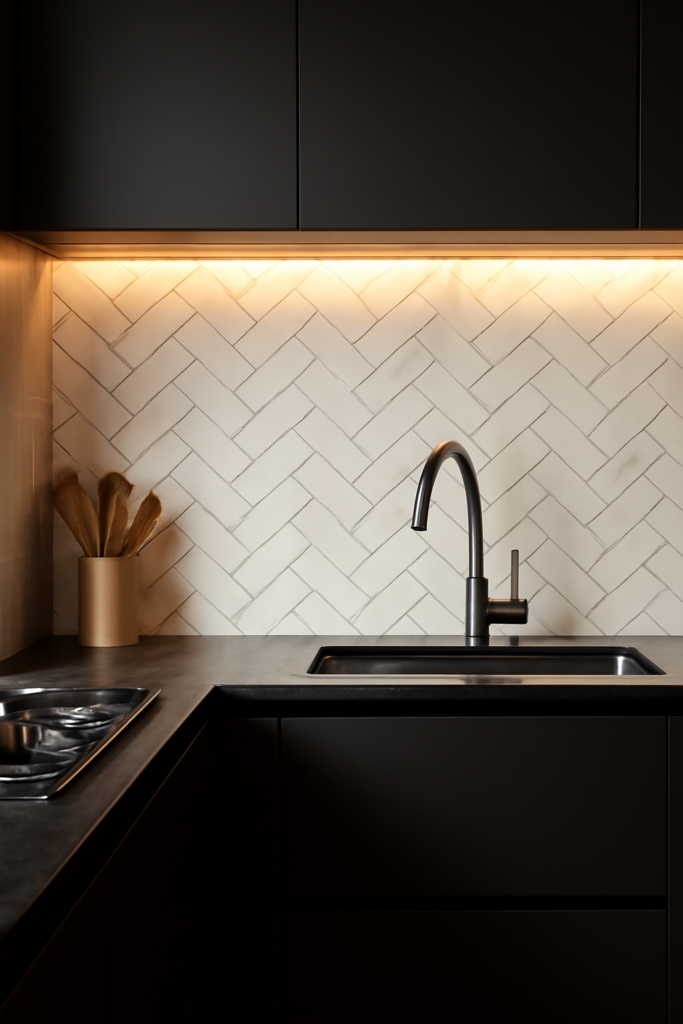
4. Herringbone Subway Tile Pattern
A popular designer favorite because it blends classic tile shapes with high-end geometry.
Benefits:
- Adds movement and dimension
- Perfect for creating a “feature wall”
Choose matte white tiles for subtle elegance or colored tiles for a modern edge.
5. Double Herringbone Pattern
A more dramatic version of the standard herringbone, this uses pairs of tiles to create larger V-shapes.
Great for:
Large shower walls & statement kitchen backsplashes.
6. Chevron Layout
Often confused with herringbone, but chevron tiles are cut at an angle to form a seamless zigzag.
Trending in 2025:
Metallic grout paired with matte chevron tiles for ultra-modern luxury.
7. Vertical Herringbone
Creates a tall, arrow-like pattern that expands vertical visual space.
Design benefit:
Perfect for narrow powder rooms and small bathrooms.
8. Basketweave Subway Tile Pattern
This pattern makes tiles appear interwoven, giving a rich, textured aesthetic.
Works best with:
Small-format subway tiles for stronger visual depth.
9. Offset One-Third Layout
A modern twist on the classic running bond, with each tile staggered by one-third instead of half.
Result:
More dynamic, visually interesting lines that feel contemporary.
10. Crosshatch Pattern
Tiles alternate vertically and horizontally, forming a woven grid.
Great for:
Laundry rooms and farmhouse-style kitchens.
11. Diagonal Subway Tile Layout
Standard tiles installed at a 45-degree angle.
Why designers use it:
Diagonal lines make rooms feel wider and more open.
12. Brick Bond With Border
A classic layout with an added border that frames the wall beautifully.
Top 2025 trend:
Borders in contrasting colors (e.g., black border + white center tiles).
13. L-Shaped Corner Pattern
Creates clean transitions around outside corners, especially in showers.
Designer insight:
Helps maintain flow without breaking the visual rhythm.
14. Mixed Orientation Layout
Combining vertical and horizontal tiles in one installation.
Why it’s powerful:
Adds high-end architectural detail instantly.
15. Gradient Subway Tile Color Layout
Tiles shift from dark to light to create an ombré effect.
Popular color gradients for 2025:
- Navy → Sky Blue
- Forest Green → Mint
- Charcoal → White
16. Two-Tone Subway Tile Layout
Using two colors arranged in a pattern creates a bold, intentional look.
Best usages:
Kitchen feature walls or half-height bathroom walls.
17. Micro Subway Tiles
Tiny rectangular tiles arranged in classic or modern patterns.
Why they’re trending:
They create a mosaic-like texture perfect for luxury spaces.
18. Long Subway Tiles (Oversized Format)
Tiles measuring 4×16 or 3×12 inches give a sleek, elongated appearance.
Benefits:
Makes kitchen backsplashes look more expansive.
19. Dark Grout with White Subway Tiles
This strong contrast highlights tile patterns dramatically.
2025 grout trend:
Charcoal, mocha, and soft graphite tones.
20. White Grout With Colored Subway Tiles
Keeps bold tile colors feeling clean, fresh, and balanced.
Top tile colors this year:
Olive green, midnight blue, terracotta, and matte black.
Best Subway Tile Colors Trending in 2025
1. Deep Greens
Represents biophilic design and nature-inspired spaces.
2. Warm Earth Tones
Especially terracotta and clay hues.
3. Muted Blues
Soft blues paired with white grout create timeless charm.
4. Matte Black
High contrast for modern kitchens and dramatic bathrooms.
5. Creams & Textured Whites
Adds character while maintaining a minimalist feel.
Grout Ideas Designers Are Loving in 2025
✔ Contrast Grout
White tiles + dark grout → bold and modern.
✔ Tonal Grout
Matching grout keeps the look soft and seamless.
✔ Metallic Grout
Gold, bronze & silver grout adds luxury and shimmer.
✔ Warm Neutrals
Beige, taupe & greige for earthy, calm vibes.
Where to Use These Subway Tile Layouts
In Kitchens
- Backsplashes
- Feature walls
- Behind stove areas
- Around windows
In Bathrooms
- Shower walls
- Accent walls
- Sink backsplashes
- Niches & inset shelves
FAQs
FAQ 1: What subway tile layout is best for small kitchens?
The best subway tile layout for small kitchens is the vertical stacked or vertical herringbone pattern because both layouts draw the eye upward and make the space feel taller. Using glossy tiles and light-colored grout enhances brightness, which adds even more visual depth and openness to compact kitchens.
FAQ 2: Which grout color works best with subway tile layouts?
The right grout depends on your desired style. Dark grout creates bold contrast, perfect for modern spaces, while light, tonal grout delivers a soft and seamless look. For 2025, warm neutrals like beige, greige, and cream are trending because they balance both contemporary and traditional tile patterns beautifully.
FAQ 3: Are subway tiles still in style in 2025?
Absolutely yes. Subway tiles continue to dominate kitchen and bathroom design because they are affordable, versatile, and available in endless patterns, textures, and colors. Designers in 2025 are experimenting more with layout creativity, oversized formats, textured finishes, and unique color combinations that make subway tiles feel modern and luxurious.
FAQ 4: What tile patterns work best for bathrooms?
Bathrooms benefit from layouts that create height and movement, such as vertical herringbone, classic running bond, or stacked vertical patterns. These designs make compact bathrooms feel larger while maintaining a clean aesthetic. For added texture, consider matte finishes or handmade tiles that catch natural light beautifully.
FAQ 5: How do I choose the right subway tile color?
Start with your home’s overall theme. For modern spaces, go with matte black, navy, or textured whites. For warm interiors, terracotta and green tiles add richness. Always consider lighting—natural and artificial—as it affects how colors appear. Test tile samples in your space before finalizing the design.
FAQ 6: Can subway tiles be used with mixed patterns?
Yes, designers are increasingly mixing patterns like vertical stacking with herringbone or integrating borders with brick bond layouts. Mixed patterns create depth and a custom aesthetic. Just ensure color consistency so the design feels intentional rather than overwhelming.


