
Best Floor Tiles for High-Traffic Areas: Top 7 Low-Maintenance Picks for Your Home
Choosing the right flooring for an Australian home involves more than just picking a pretty pattern. Between the red dust of the outback, the sandy feet from the coast, and the high-energy flow of modern open-plan living, your floors endure significant stress. Finding the best floor tiles for high-traffic areas is the secret to a home that looks pristine years after installation without requiring a grueling maintenance schedule.
In this guide, we break down the top 7 low-maintenance picks that balance durability with aesthetic appeal. Whether you are renovating a bustling kitchen in Sydney or a sun-drenched hallway in Perth, these selections are engineered to withstand the heavy footfall of kids, pets, and entertaining.
See more: Factory Outlet Furniture Sydney: Bargains Without Sacrificing Style
What Defines a High-Traffic Area?
In residential architecture, a high-traffic area is any zone where movement is frequent and concentrated. These spots are the “highways” of your home.
Common High-Traffic Zones
- The Entryway and Mudroom: The first point of contact for grit, moisture, and heavy boots.
- The Kitchen: The heart of the home, prone to spills, dropped utensils, and constant pivoting.
- Main Hallways: Narrow channels that concentrate wear and tear into specific paths.
- Living and Dining Rooms: Areas where furniture is frequently moved and social gatherings occur.
Why Tile Choice Matters
Standard tiles may look great initially, but in high-velocity zones, inferior materials can crack, stain, or lose their finish. Selecting the best floor tiles for high-traffic areas ensures that your investment resists abrasion and remains easy to clean, keeping your home’s resale value high.
The Science of Durability: Understanding PEI Ratings
Before we dive into our top picks, it is essential to understand how tiles are rated for wear. The Porcelain Enamel Institute (PEI) rating is the industry standard for measuring a tile’s resistance to abrasion.
| PEI Rating | Recommended Use | Suitability for High-Traffic |
| PEI 1 | Residential walls or light-duty bathrooms. | No |
| PEI 2 | Residential bathrooms and bedrooms. | No |
| PEI 3 | All residential rooms, light commercial. | Moderate |
| PEI 4 | High-traffic residential, medium commercial. | Ideal |
| PEI 5 | Heavy commercial and industrial. | Exceptional |
For the best floor tiles for high-traffic areas, we recommend focusing on tiles with a PEI 4 or 5 rating to ensure longevity.
Top 7 Low-Maintenance Picks for Australian Homes
1. Full-Body Porcelain Tiles
Porcelain is the undisputed king of high-traffic flooring. Unlike ceramic, porcelain is fired at higher temperatures, making it denser and less porous. “Full-body” means the color and pattern run through the entire thickness of the tile.
- Why it works: If a full-body porcelain tile chips, the damage is nearly invisible because the color is consistent throughout.
- Maintenance: Sweep and occasional damp mop; it requires no sealing.
2. Glazed Vitrified Tiles (GVT)
GVT tiles offer a protective glaze layer over a vitrified body. This glaze allows for incredibly realistic digital prints, such as marble or wood grains, while the vitrified core handles heavy loads.
- Why it works: The non-porous surface prevents liquid absorption, making it perfect for spilled wine or muddy paw prints.
- Maintenance: Extremely stain-resistant; just use a pH-neutral cleaner.
3. Natural Slate (Honed or Riven)
For those seeking a rustic, Australian aesthetic, slate is a powerhouse. It is naturally slip-resistant and incredibly hard.
- Why it works: Its multi-tonal nature hides dust and pet hair exceptionally well.
- Maintenance: Needs to be sealed once every few years, but the daily upkeep is minimal.
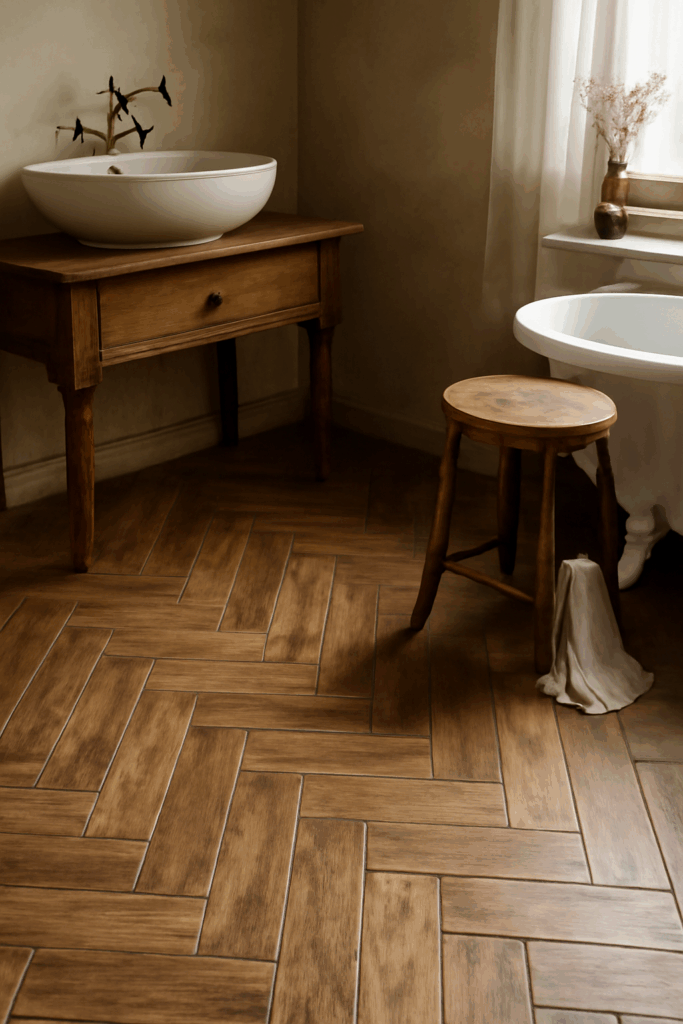
4. Timber-Look Porcelain Planks
Want the warmth of hardwood without the scratching and water damage? Timber-look porcelain is the ultimate “cheat code” for high-traffic living rooms.
- Why it works: You get the aesthetic of Oak or Spotted Gum with the scratch-resistance of stone.
- Maintenance: No sanding or polishing required—ever.
5. Concrete-Look Large Format Tiles
Minimalism meets durability. Large format tiles (600x600mm or larger) reduce the number of grout lines—the most vulnerable part of any floor.
- Why it works: Fewer grout lines mean less scrubbing and a more seamless, modern look.
- Maintenance: Focus on cleaning the tiles; the minimal grout stays cleaner for longer.
6. Natural Quartzite
Often confused with marble, quartzite is significantly harder and more resistant to scratching and etching from acidic spills (like lemon juice or vinegar).
- Why it works: It offers a high-end luxury look with industrial-strength durability.
- Maintenance: Requires sealing but is remarkably resilient against physical impact.
7. Terrazzo (Real or Porcelain-Effect)
Terrazzo is making a massive comeback in Australian design. Its speckled appearance is more than just a style choice; it is functionally superior at hiding imperfections.
- Why it works: The busy pattern naturally masks small scratches or dust buildup.
- Maintenance: Porcelain-effect terrazzo offers the best of both worlds—zero sealing and high durability.
Key Benefits of Choosing High-Performance Tiles
Investing in the best floor tiles for high-traffic areas provides several long-term advantages:
- Cost Efficiency: While the initial cost may be higher than laminate or vinyl, tiles can last 20–50 years, reducing the “cost per year” significantly.
- Hypoallergenic Living: Unlike carpet, tiles do not trap dust mites, pollen, or dander—essential for the 1 in 5 Australians who suffer from hay fever.
- Thermal Mass: In the Australian climate, tiles help regulate indoor temperatures, keeping homes cooler in summer and retaining sun-warmth in winter.
- Water Resistance: Tiles are impervious to the humidity and spills that cause wood or laminate to warp.
Best Practices for Installation and Maintenance
Choosing the Right Grout
Even the best tile can be let down by poor grout choice. For high-traffic areas, always opt for epoxy grout. Unlike traditional cement-based grout, epoxy is waterproof and stain-proof, ensuring your “low-maintenance” floor actually stays that way.
The “Slip Resistance” Factor
In Australia, the “P” rating (Pendulum test) is vital. For entryways and wet areas, look for a P3 or P4 rating to ensure safety when the floor is wet.
Professional vs. DIY
While DIY is tempting, high-traffic tiles must be perfectly level (lippage-free) to prevent tripping and edge-chipping. Professional installation ensures a flat surface that can withstand years of furniture movement.
Common Mistakes to Avoid
- Using Wall Tiles on Floors: Wall tiles are thinner and will crack under the weight of furniture or foot traffic.
- Choosing High-Gloss in Entryways: While beautiful, high-gloss finishes show every footprint and can be slippery when wet.
- Neglecting the Subfloor: If your subfloor isn’t stable, even the strongest porcelain will crack as the house settles.
Frequently Asked Questions (FAQ)
Which tile is best for a home with large dogs?
Porcelain tiles with a matte or textured finish are best. They are virtually scratch-proof and provide better traction for paws than polished marble or ceramic.
How do I clean grout in high-traffic areas?
If using epoxy grout, a simple wipe-down is enough. For traditional grout, use a mixture of baking soda and vinegar or a dedicated oxygen-based grout cleaner to lift deep-seated dirt.
Are darker tiles better for high-traffic zones?
Not necessarily. Very dark tiles (black/navy) often show dust and water spots more than mid-tone greys or beiges. “Greige” or speckled patterns are the most forgiving.
Do all floor tiles need to be sealed?
No. Most modern porcelain and glazed tiles do not require sealing. Only natural stones (slate, marble, limestone) and some unglazed terracotta need regular sealing.
Is porcelain better than ceramic for a kitchen?
Yes. Porcelain is denser and has a lower water absorption rate (less than 0.5%), making it far superior for the spills and heavy footfall of a kitchen.
Conclusion: Investing in Your Home’s Future
Selecting the best floor tiles for high-traffic areas is a strategic decision that blends lifestyle needs with long-term property value. By prioritizing PEI ratings, opting for low-porosity materials like porcelain, and choosing smart finishes like timber-looks or terrazzo, you create a home that is as functional as it is beautiful.
Don’t let the fear of maintenance dictate your design. With the right tile, you can enjoy an elegant interior that stands up to the rigors of Australian life.
Internal Linking Suggestions:
- Learn more about [Slip Resistance Ratings for Australian Homes].
- Check out our guide on [How to Choose the Right Grout Color].
- Explore the [Benefits of Porcelain vs. Ceramic].
External Reference Suggestions:
- Refer to the Australian Tile Council for technical standards.
- Consult the CSIRO Handbook for Slip Resistance Classifications.